Two decks
A second chassis drawn around a 10.1-inch screen, a second deck built on 1 October, an eighth pad nobody expected, an accent colour each, a hotspot of its own, and a splash on screen twelve seconds sooner.

One deck is a prototype. Two decks are a booth, or at least half of one. September went into a second chassis, and on 1 October a second deck was built in it.
The second chassis
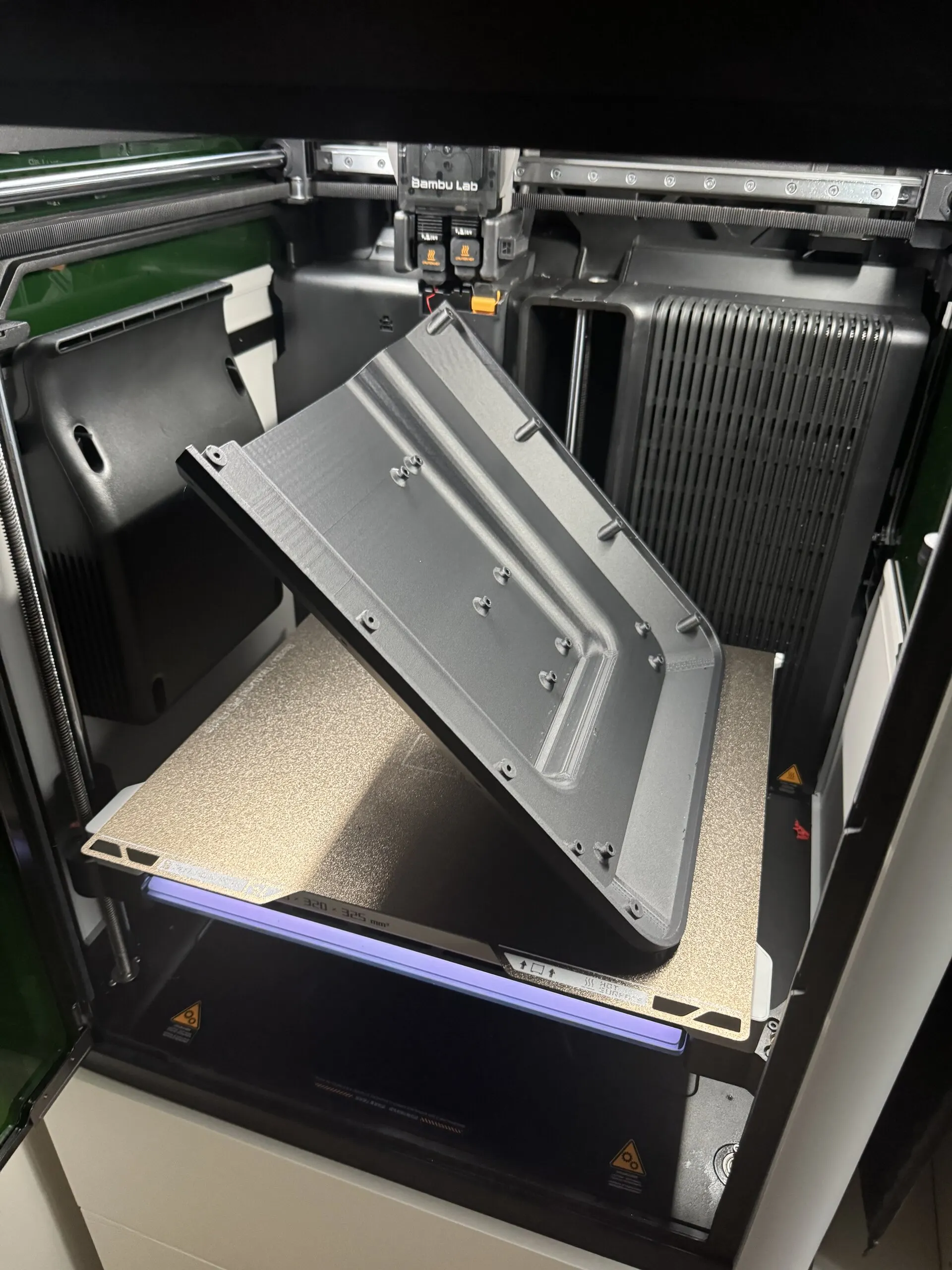
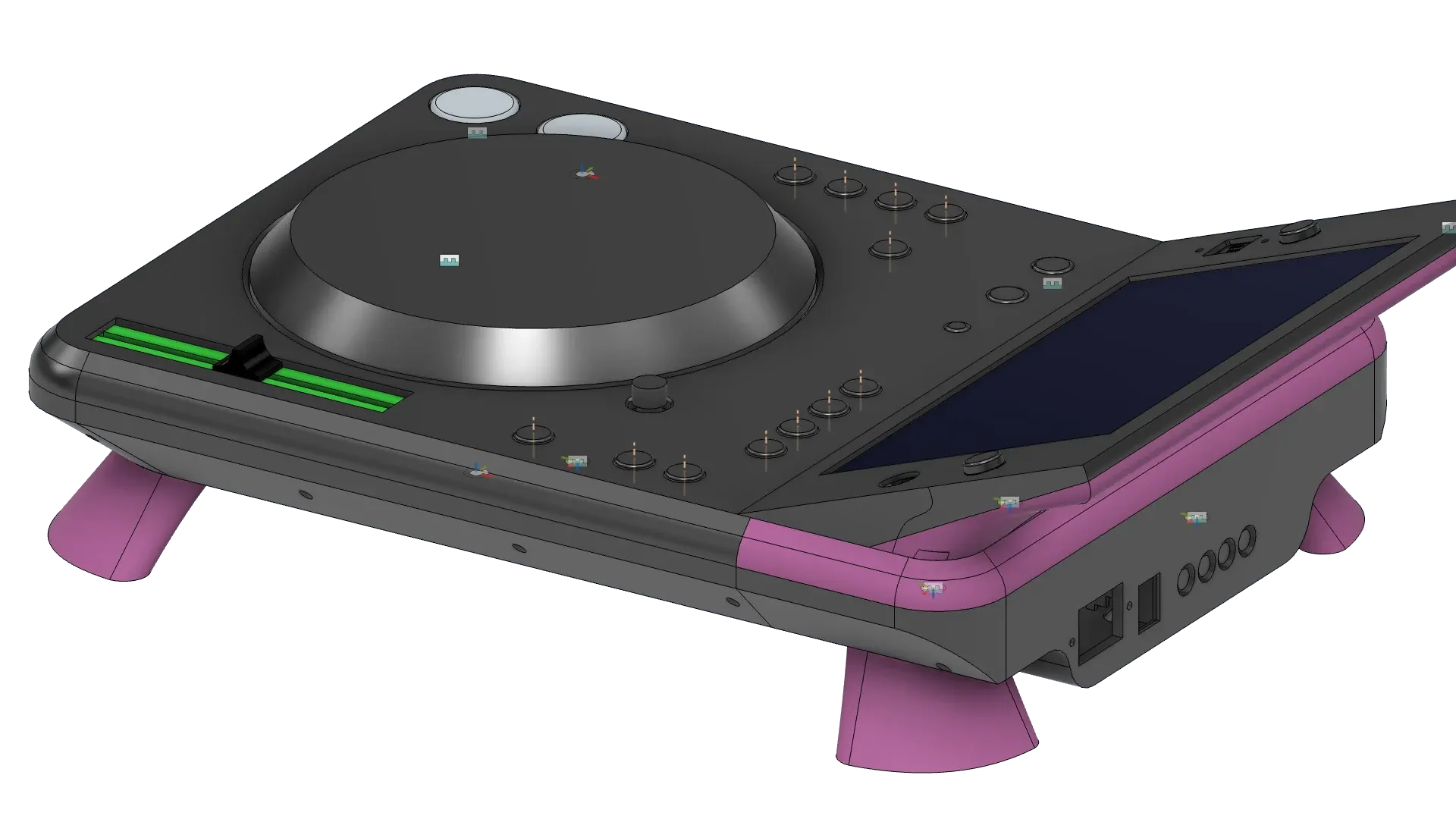
The first chassis had copied a CDJ-3000’s whole envelope. The second, drawn in September, is lower and tighter: 423 × 329 × 85 mm, with the screen tilted back behind the jog wheel and the pads, and the PLAY and CUE buttons down to 33 mm.
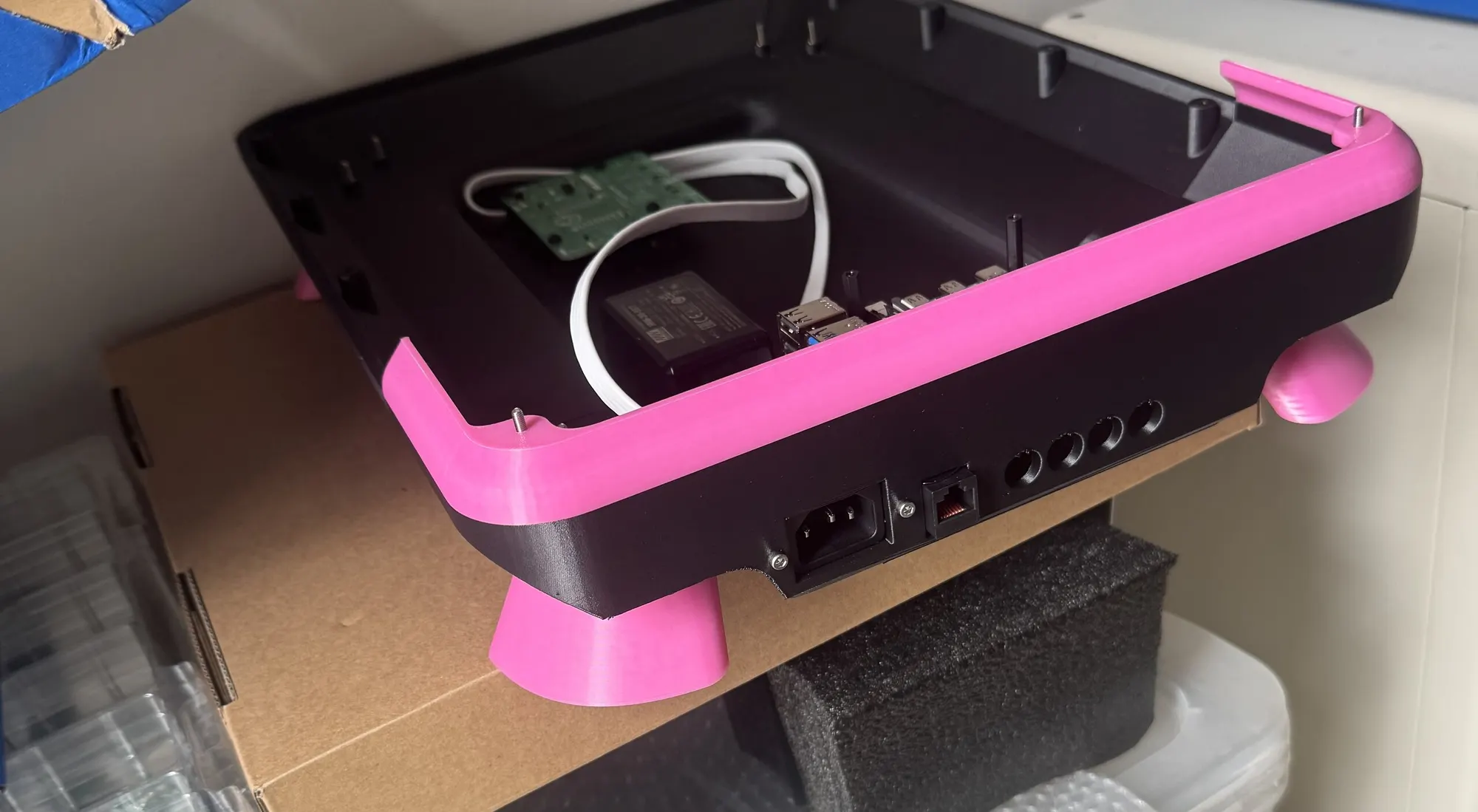
The screen is a Waveshare 10.1-inch DSI panel, 1280 × 800, with touch. Its mounting was measured from the panel itself once it had arrived, and the notes are glad of that order of events: designing it from the datasheet first would have gone wrong. On the back panel are an IEC mains inlet feeding a 5 V module inside, an RJ45 coupler for the Pro DJ Link cable, and the sound card’s RCA sockets.
Bringing up trimixxx2
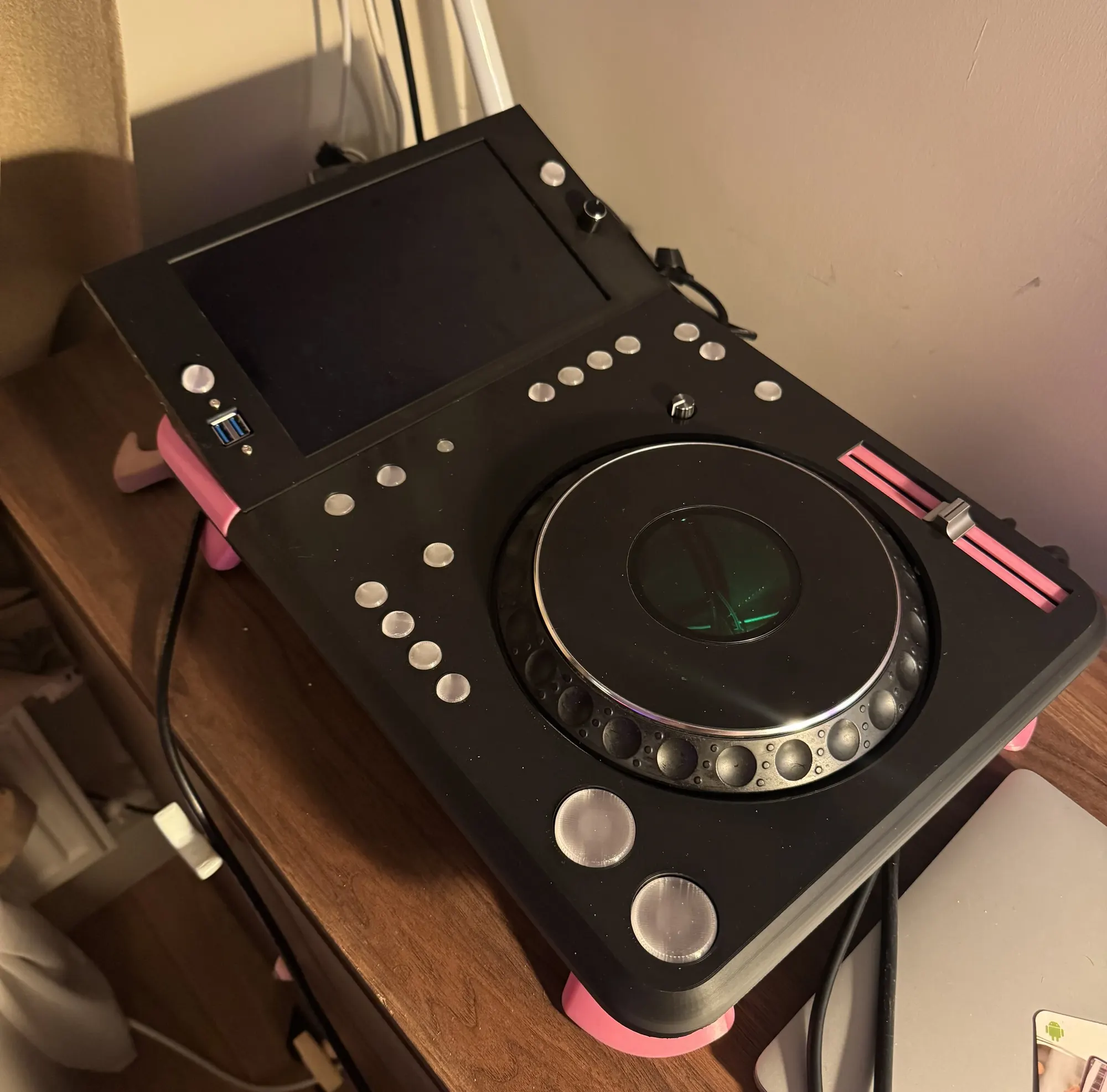
The second deck was assembled on 1 October, and its bring-up was written down step by step as it happened, from a freshly flashed card to a working deck: what a new unit needs, in order, so the third won’t need anyone’s memory.
The best moment of the day was a button that did nothing. BACK seemed dead. Pressing every control on the deck in order, with a MIDI monitor running, showed why: this deck’s ring A had an eighth pad, third in its chain. Every pad after it arrived one note late, so ÷2 was opening the library and BACK was sending a note nobody listened to. Its hot cues arrived in reverse order too, and its jog wheel turned the other way.
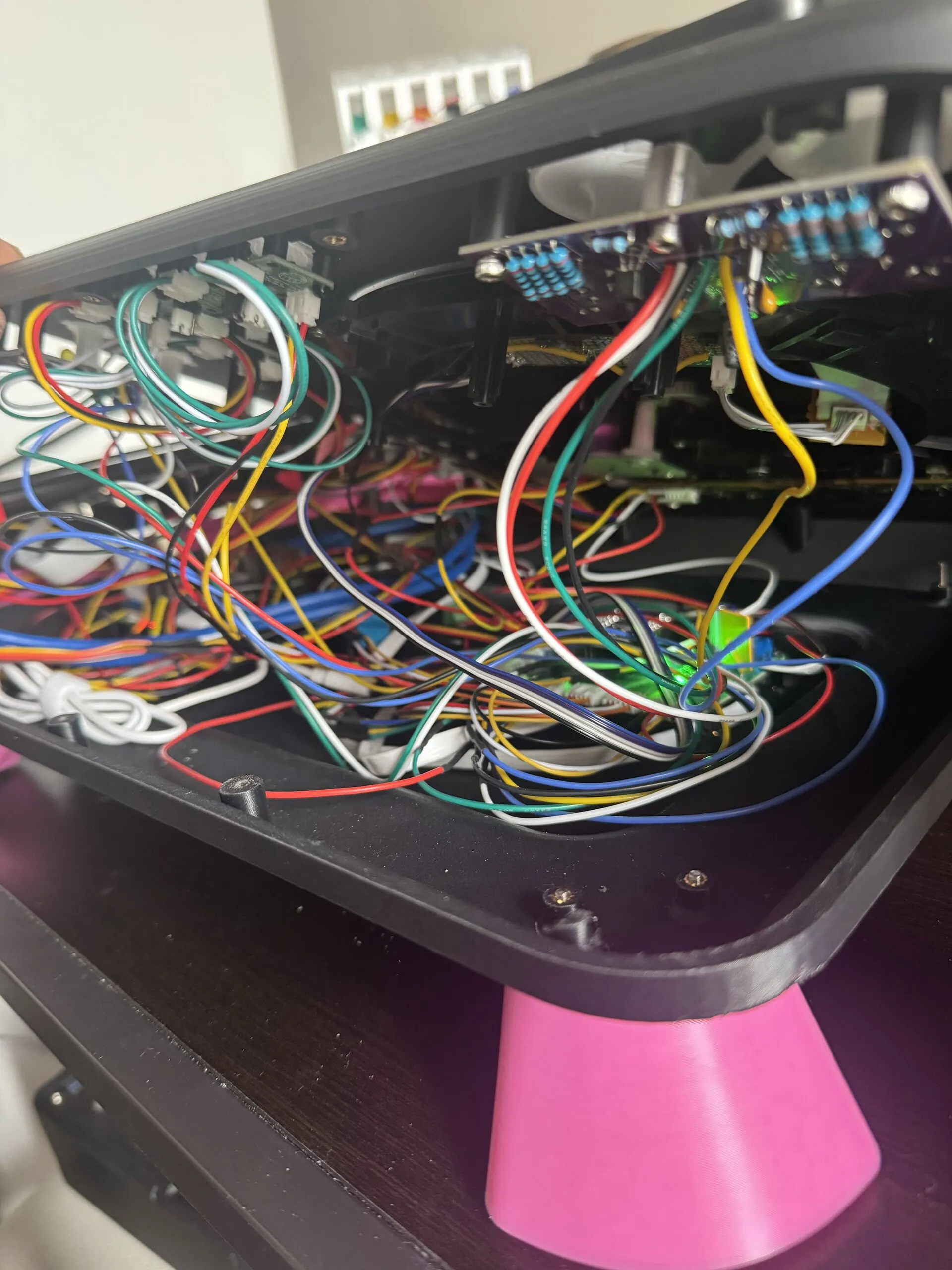
None of that was fixed in the firmware. Each deck now has a small file describing its own wiring, and the configuration step renumbers the Mixxx mapping from it for that deck alone. The S3s all run the same firmware, and a deck wired differently is one more file.
An accent colour each
Two decks on a table look identical from a distance, so each got its own accent colour: the selection in the browser, the header’s rule, the key, the BPM, the remaining time. trimixxx1 keeps the skin’s lime. trimixxx2 is pink. The emulated deck, which is a virtual copy of trimixxx2, is cyan, so a screenshot never says the wrong deck.
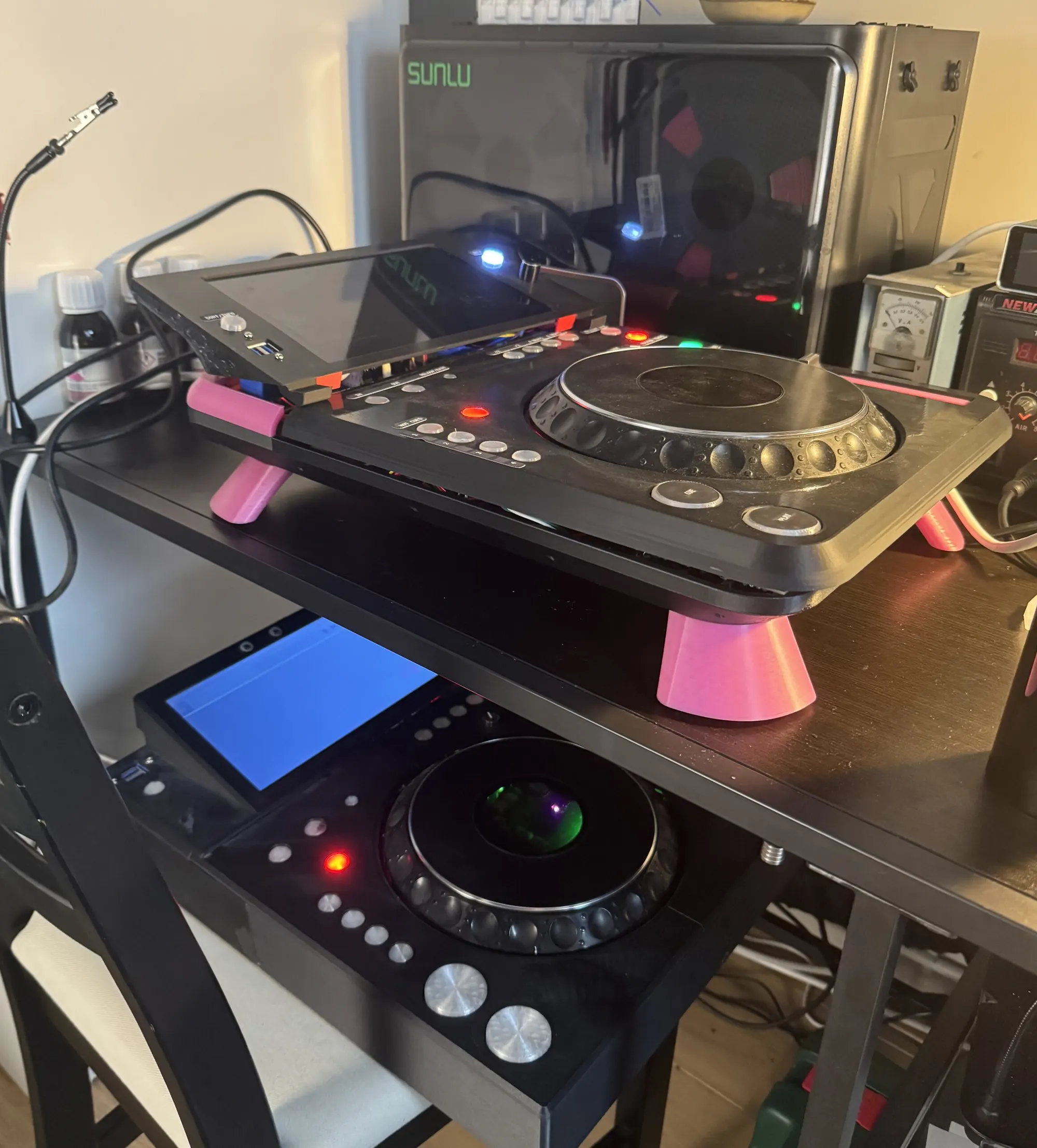
The same file also says whether the panel sits behind a lip or flush with the case, so the skin knows whether to keep its edges clear. And the pads were dimmed to a perceived 80 % of full, which, because eyes aren’t linear, is about 61 % of full drive.
A splash in eight seconds
On power-on, trimixxx2’s screen stayed black for about twenty seconds before the logo. A day of measuring found where they went:
- the bootloader showed a network-install screen on every cold boot, which cost more than five seconds, until the Pi’s EEPROM was told not to;
- the panel waited for its drivers to load from the root filesystem, until they were put in the initramfs, which brought the panel up 1.66 s after the kernel started instead of 6.15;
- the swap configuration ran a Perl script on every boot, until its sizes were pinned.
Counted by hand from the power switch, the logo now appears after about 8 seconds, and the whole boot takes 15.3 seconds, down from 22.9, and from 49.5 on a fresh card. The splash still lets the boot log print behind it: on a deck about to play a gig, a service that failed to start should be visible before the music needs it.
Every one of these boot changes was tried first through the Pi’s own one-shot tryboot
: a candidate configuration that runs once, and if it fails, the next power cycle comes back as
before. A deck you can’t plug a keyboard into has to be changed this way.
A network of its own
In a club there is no known Wi-Fi to join, and a deck nobody can reach can’t be fixed. So if the deck has joined no network 45 seconds into its boot, it becomes a hotspot named after itself, on its own 2.4 GHz channel, once per boot, with nothing waiting on it. On trimixxx2, a phone joined it and logged into the deck over ssh.
The next two days added the rest of what a deck needs when something goes wrong: the touchscreen rescue console, every light switched off at shutdown, because the controller stays powered after the Pi halts and the last lit lamp used to stay lit, and a Diagnostics page that can set the deck’s output level and its screen’s brightness.
Three days later, trimixxx2 went to a gig.