Building it
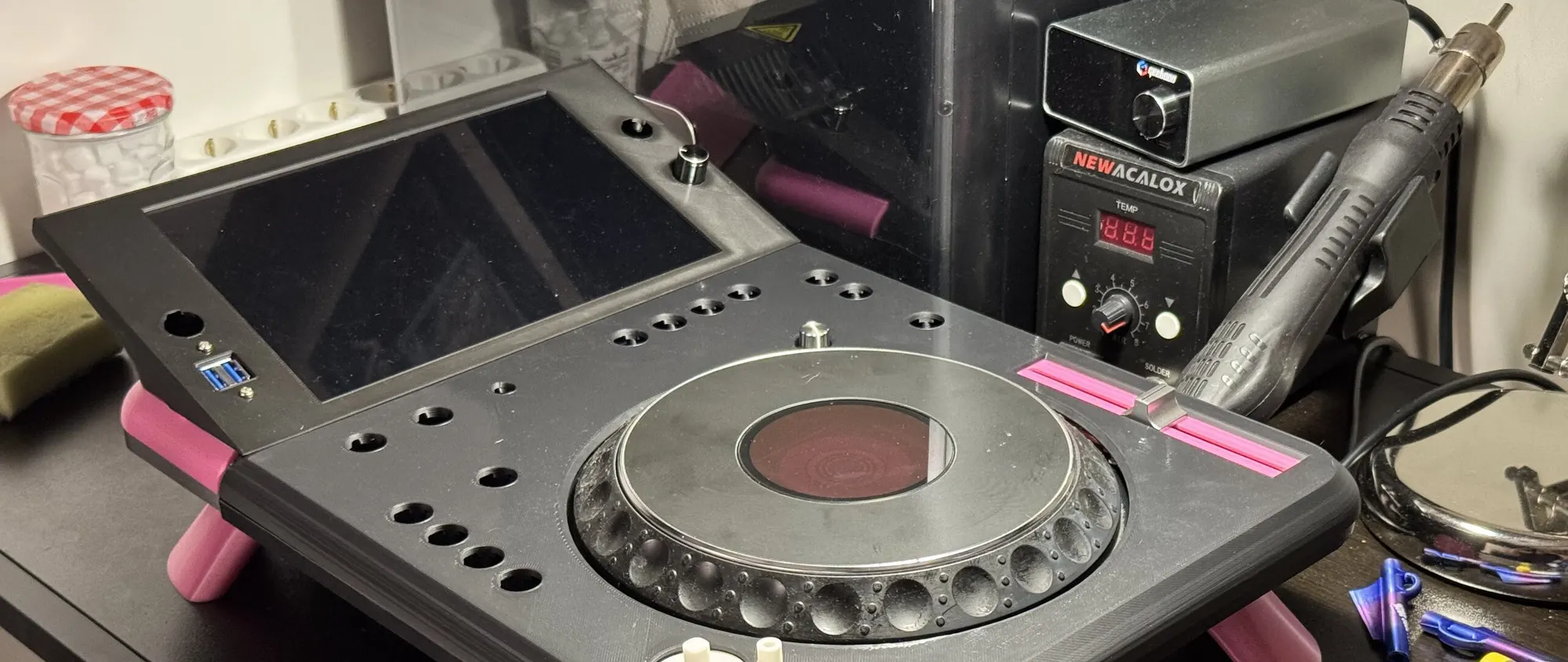
- The V2 body on 17 September 2026, printed and assembled, before its buttons went in.
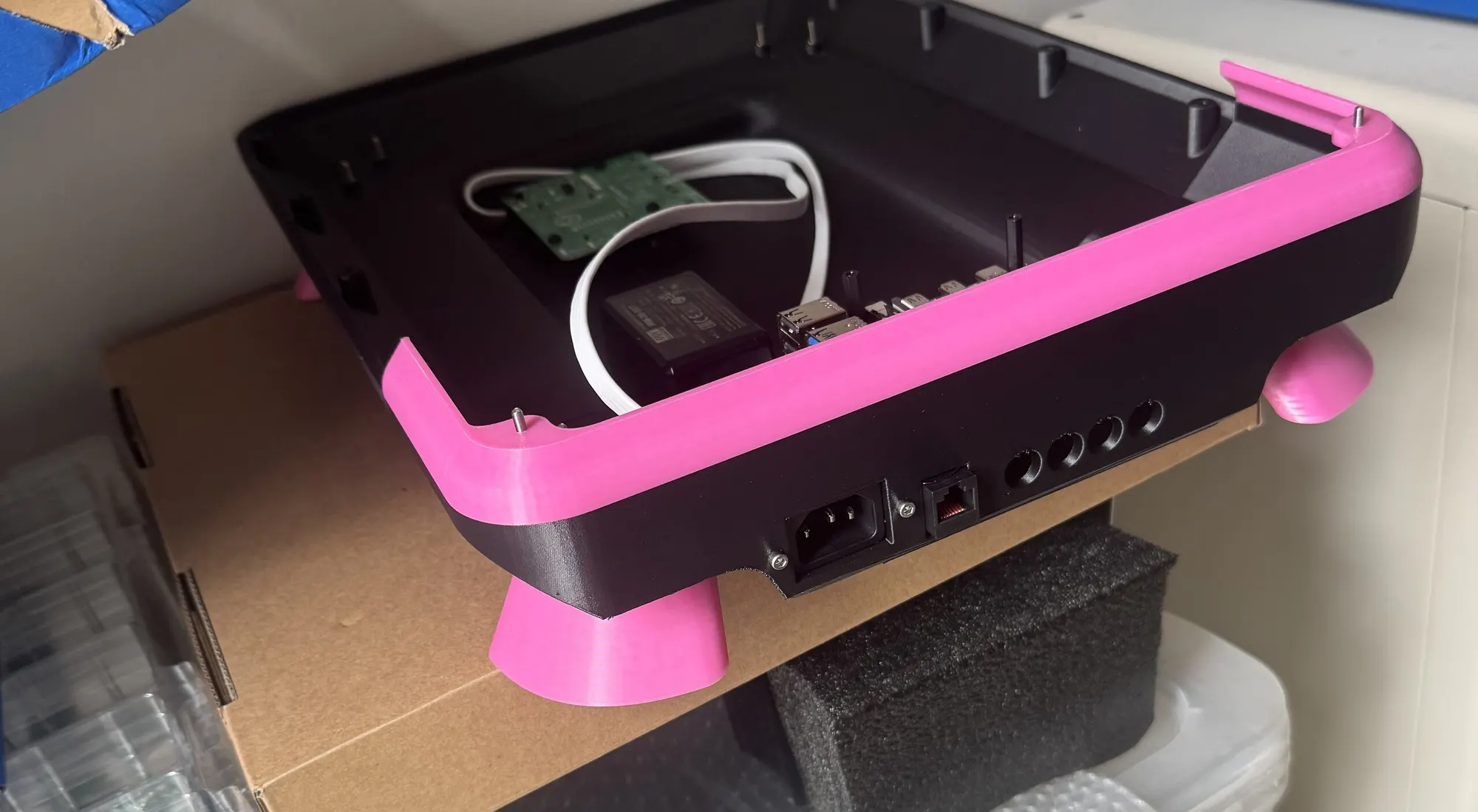
- The first V2 base with its pink bumpers and legs, 10 September 2026.
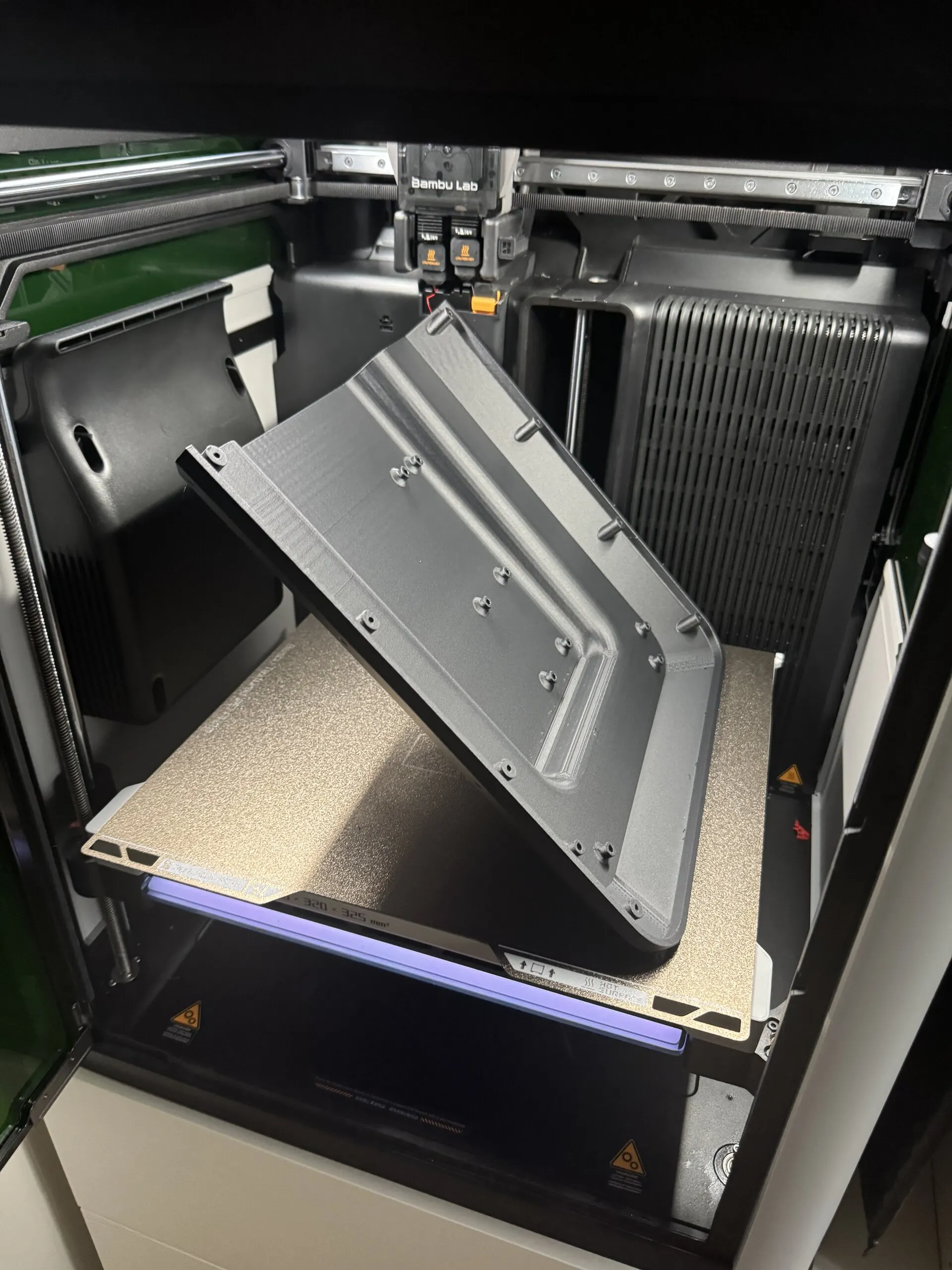
- A V2 body panel printing on the Bambu Lab H2D, 9 September 2026.
- Two printed halves of a V1 panel, joined on a zig-zag seam and welded with melted plastic, 3 June 2026.
- The V1 mock-up on 2 June 2026: the CDJ jog, the tempo fader and the screen in their printed parts.
- The first electronics in the printed tub: a Raspberry Pi 4, an audio board and a mains power supply, 18 May 2026.
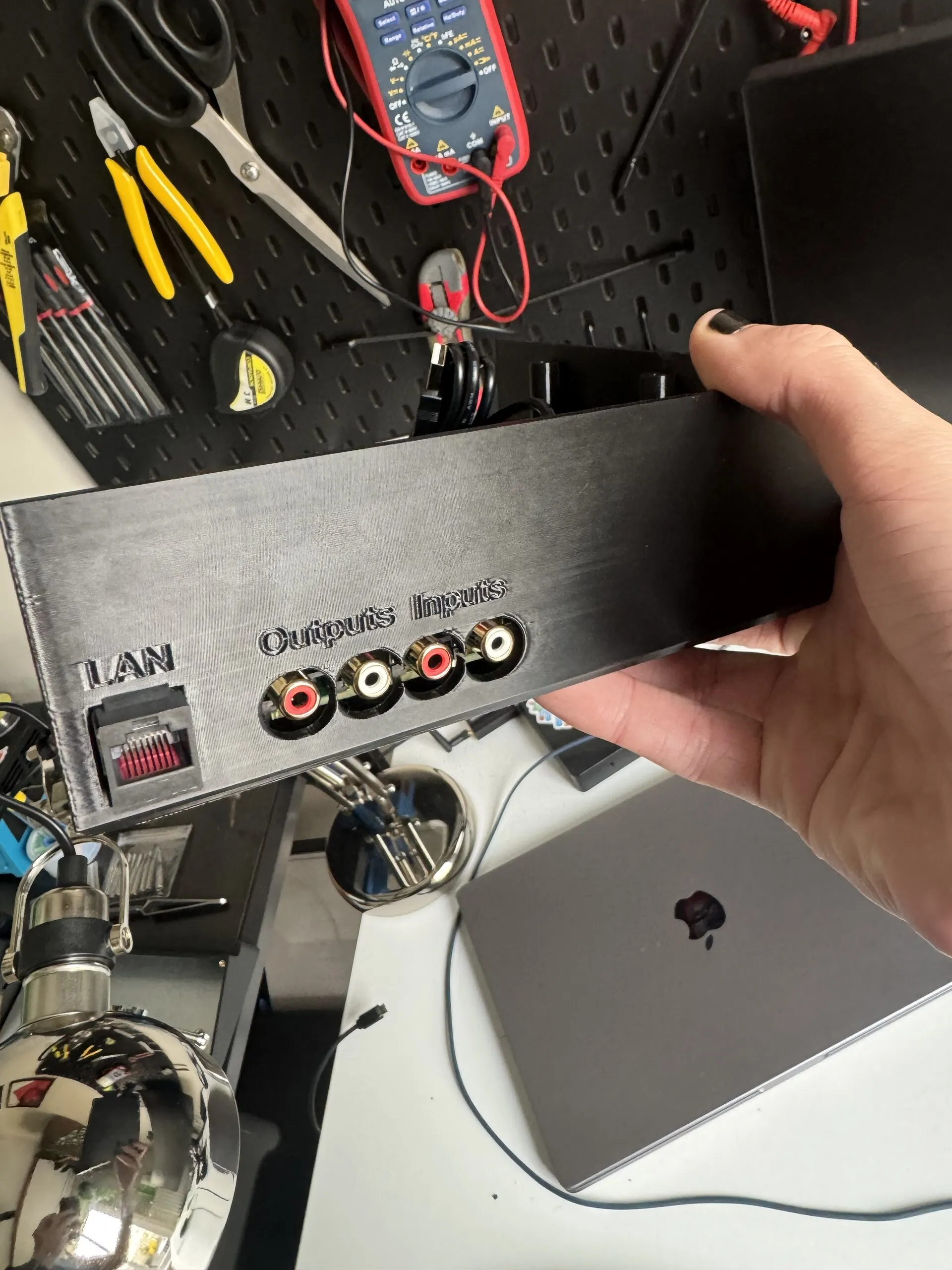
- The V1 rear panel with its embossed labels: LAN, outputs and inputs, 18 May 2026.
- A test ring printed to fit around the CDJ's jog, 17 May 2026, the day the printer arrived.
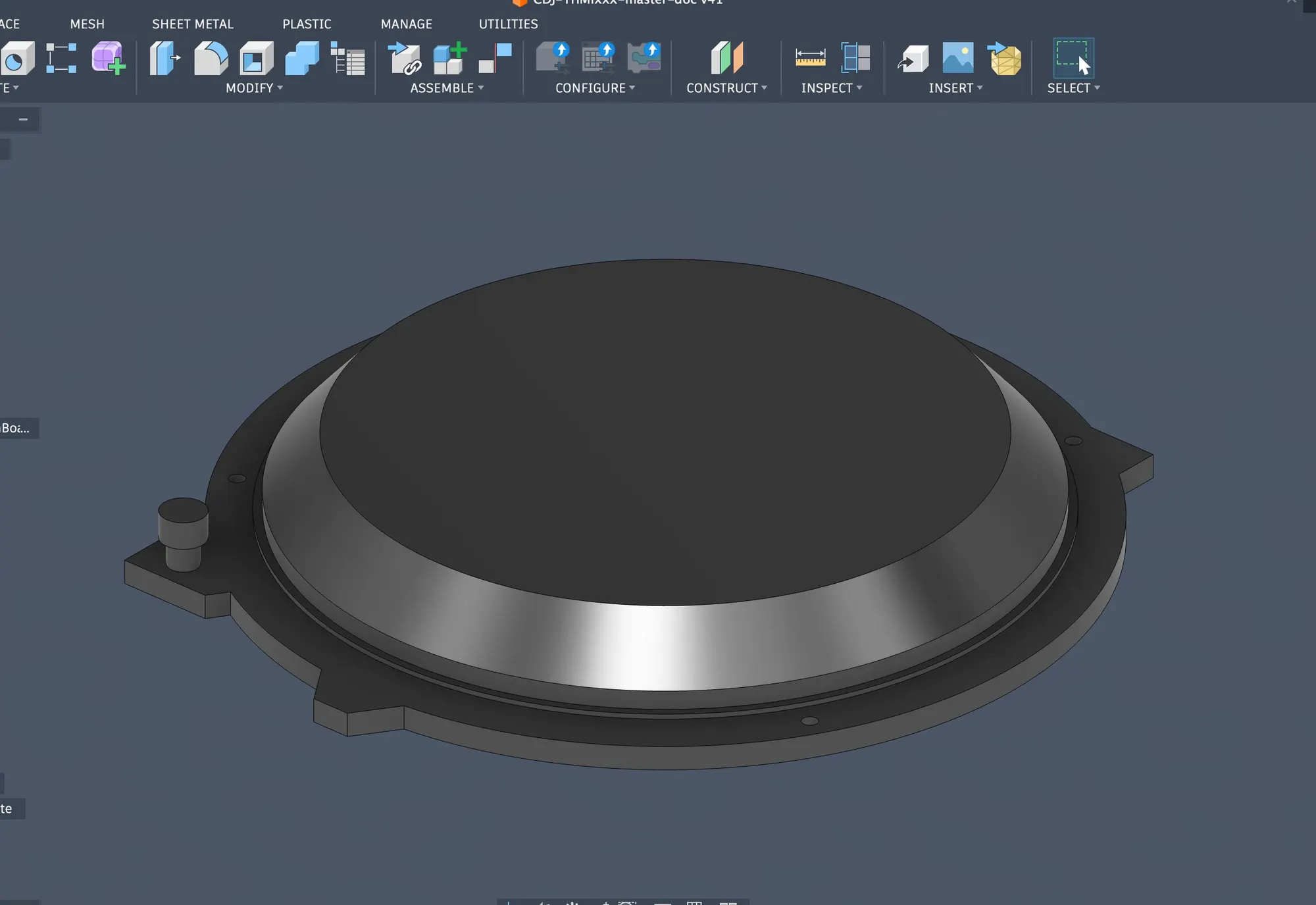
- The CDJ-1000MK3's jog assembly, modelled in Fusion 360 from the measurements, May 2026.
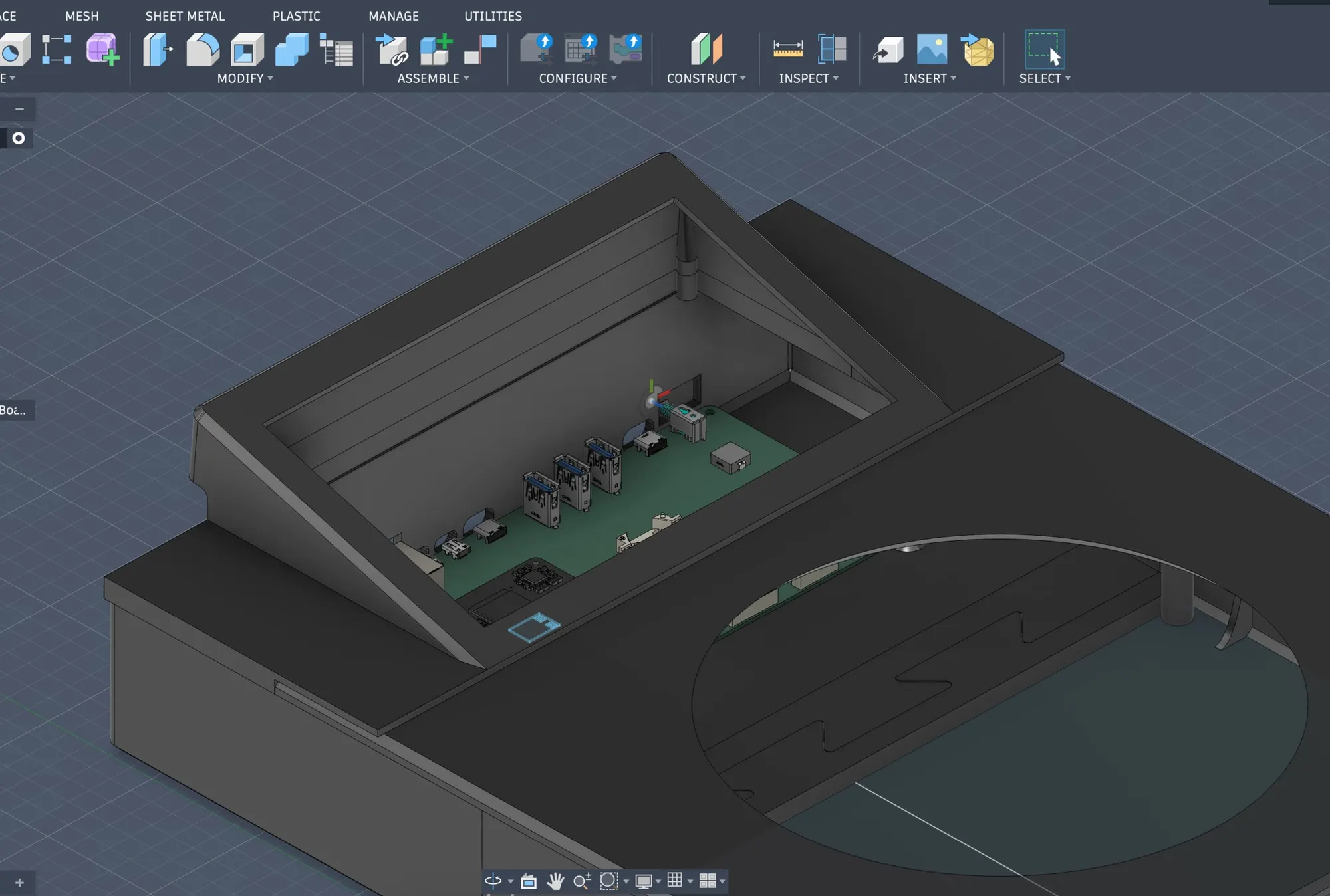
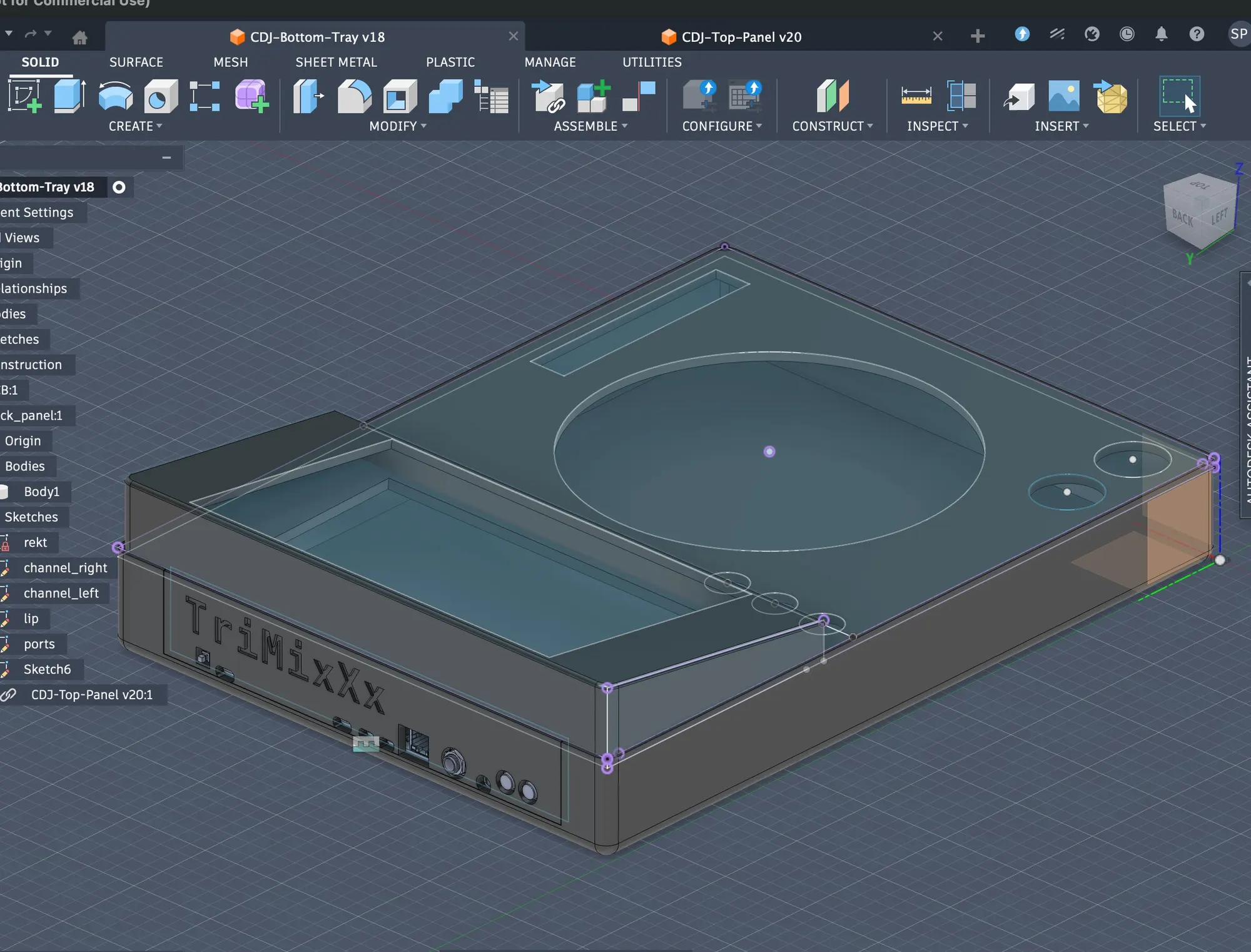
- The V1 chassis model in May 2026, still holding the long monolithic board under its screen.
- The V1 chassis model in April 2026, from the back, with its name on the rear panel.
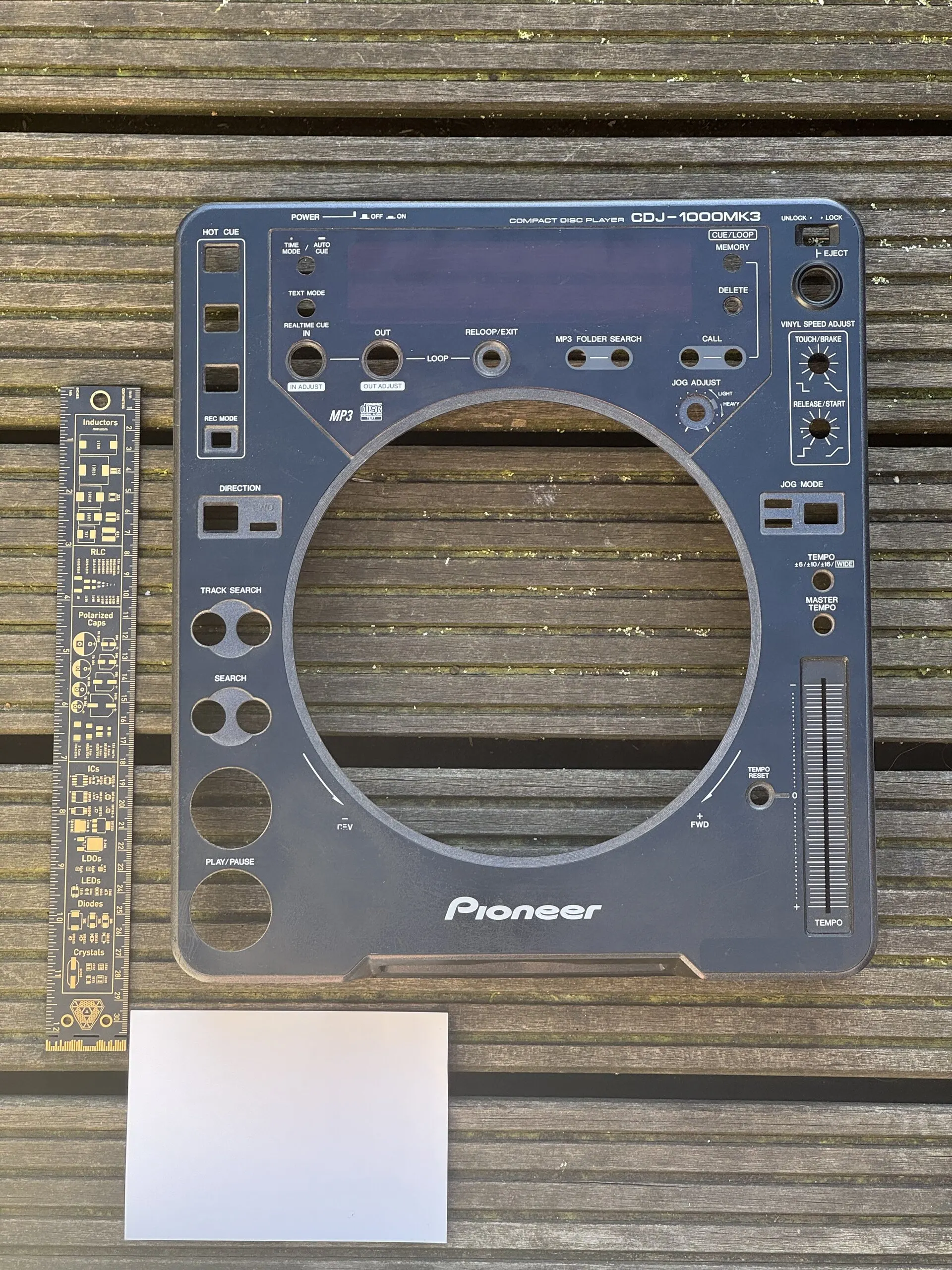
- Measuring the CDJ-1000MK3's faceplate against a PCB ruler, 14 April 2026.
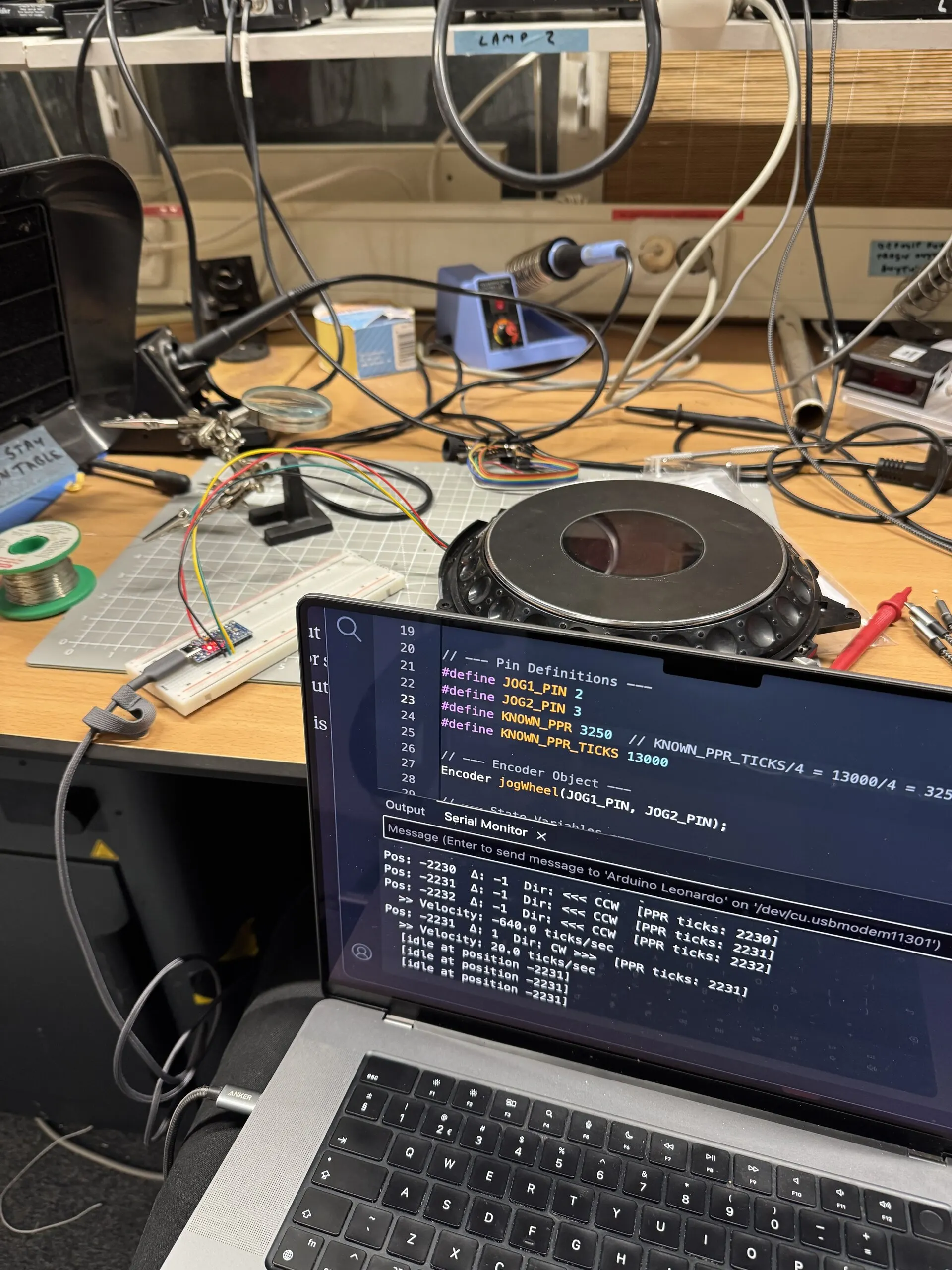
- Reading the jog wheel's encoder with an Arduino, 23 February 2026.
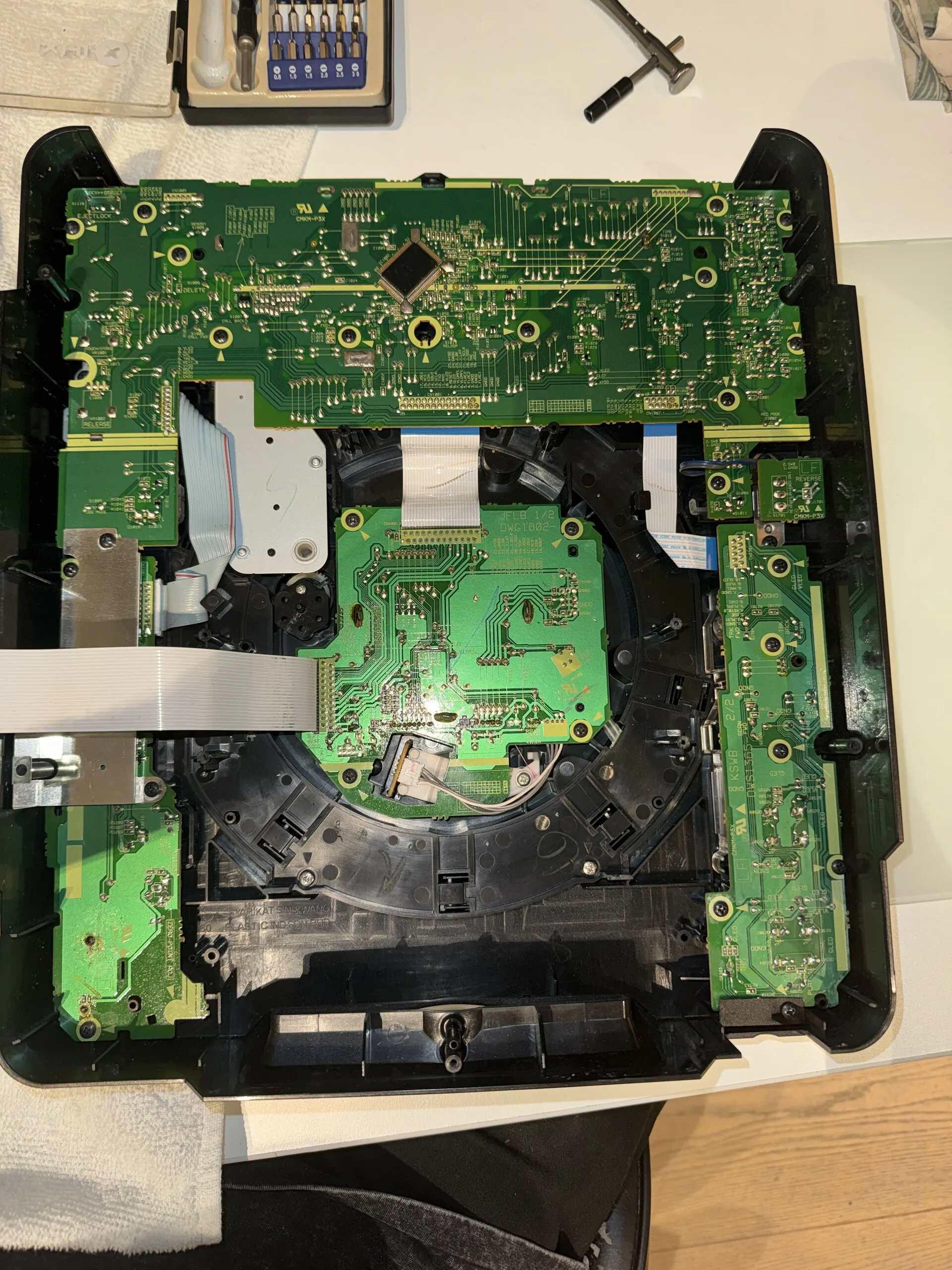
- The CDJ-1000MK3's top case opened, 17 February 2026.
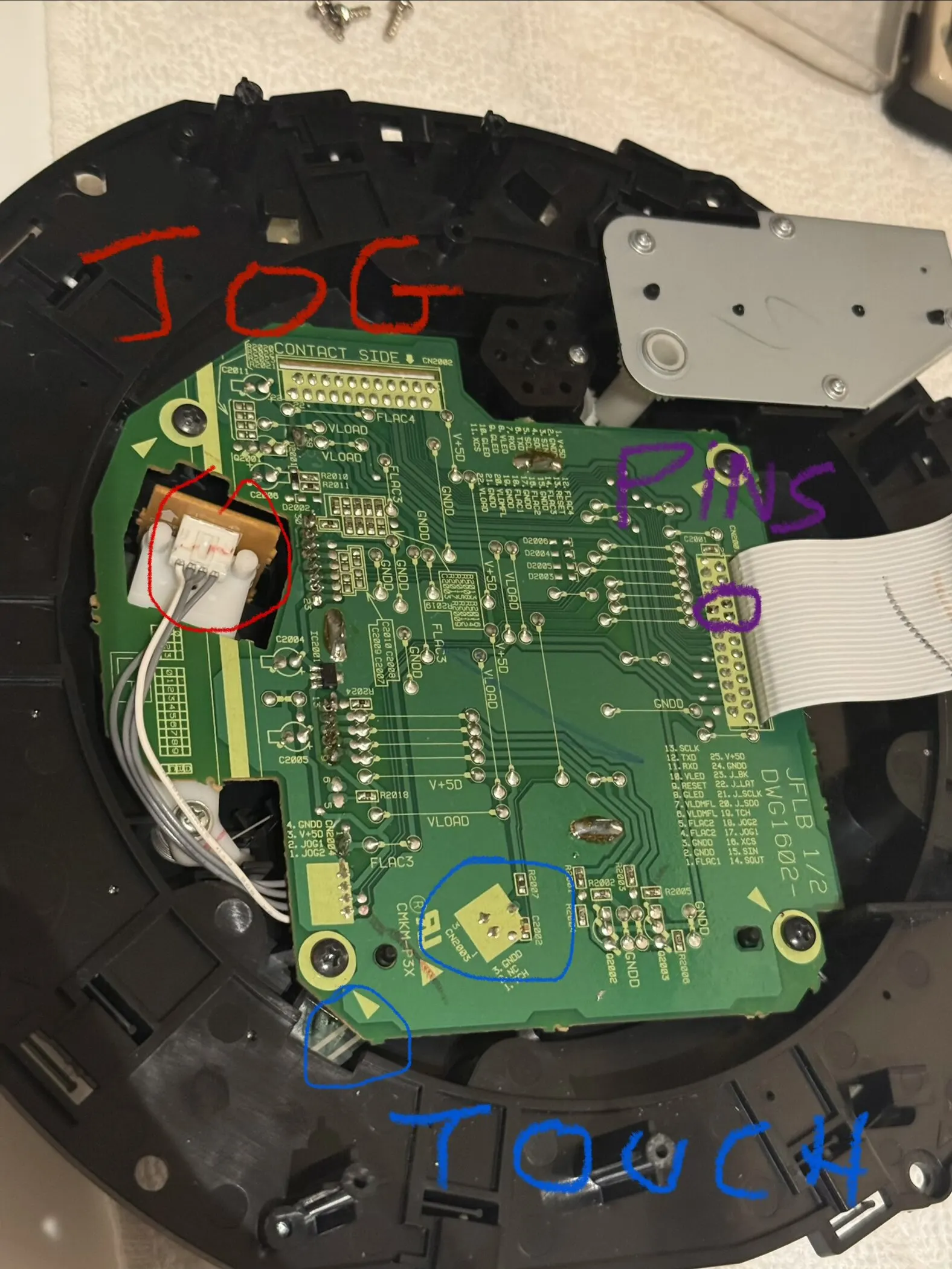
- The jog's circuit board, its three connectors marked by hand: the encoder, a pin header and the touch contact.
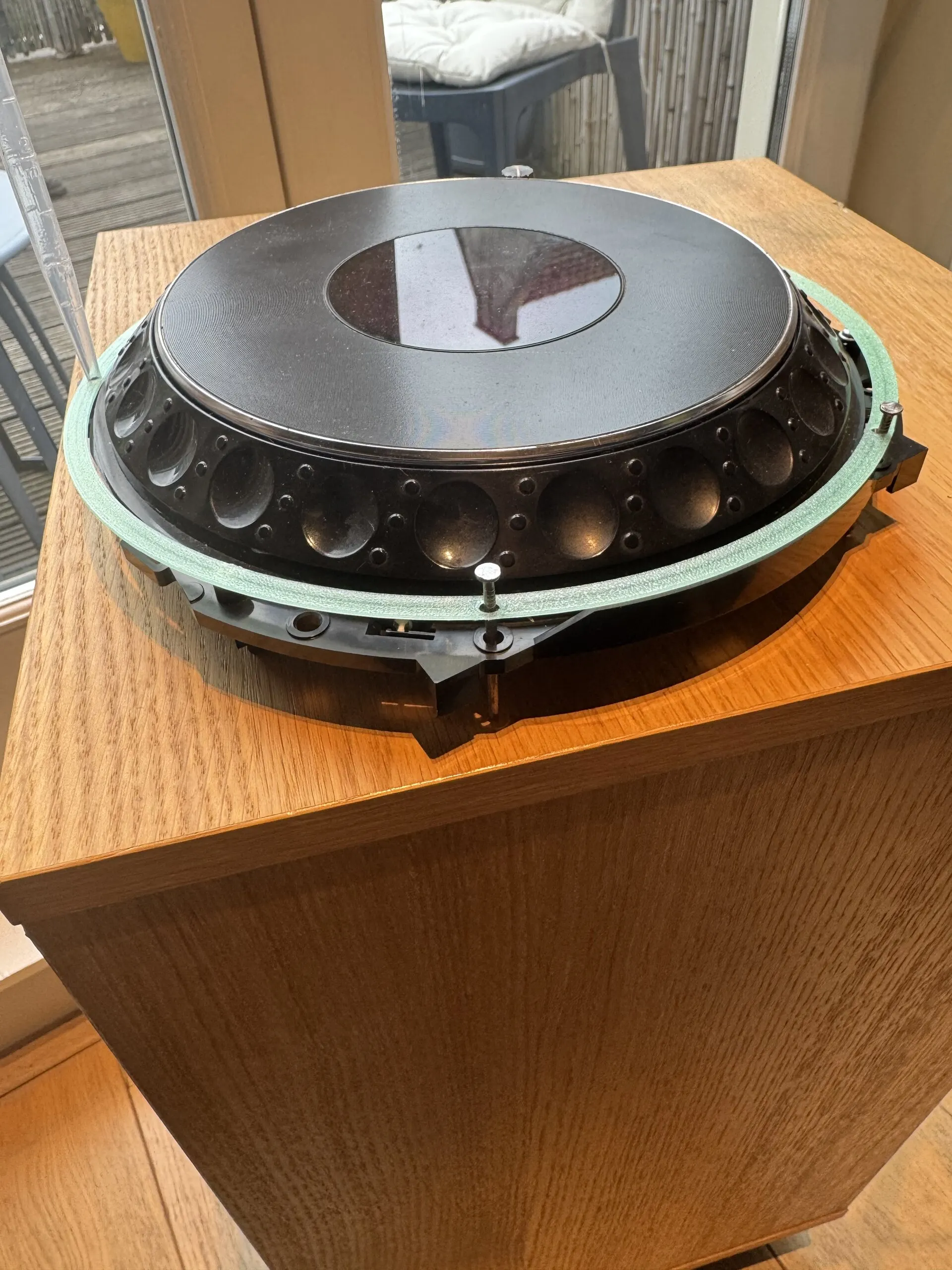
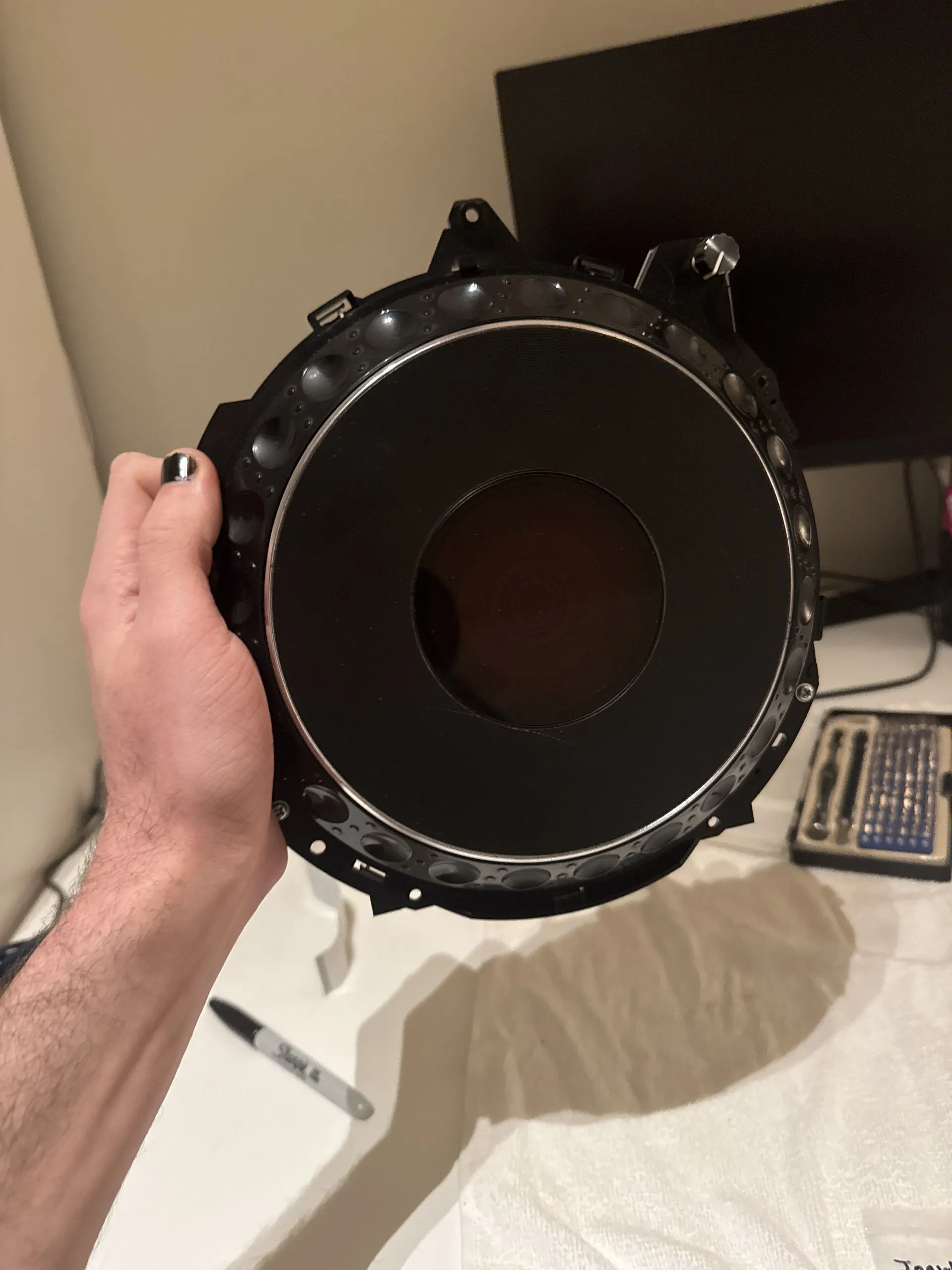
- The jog assembly out of the CDJ-1000MK3, 17 February 2026.
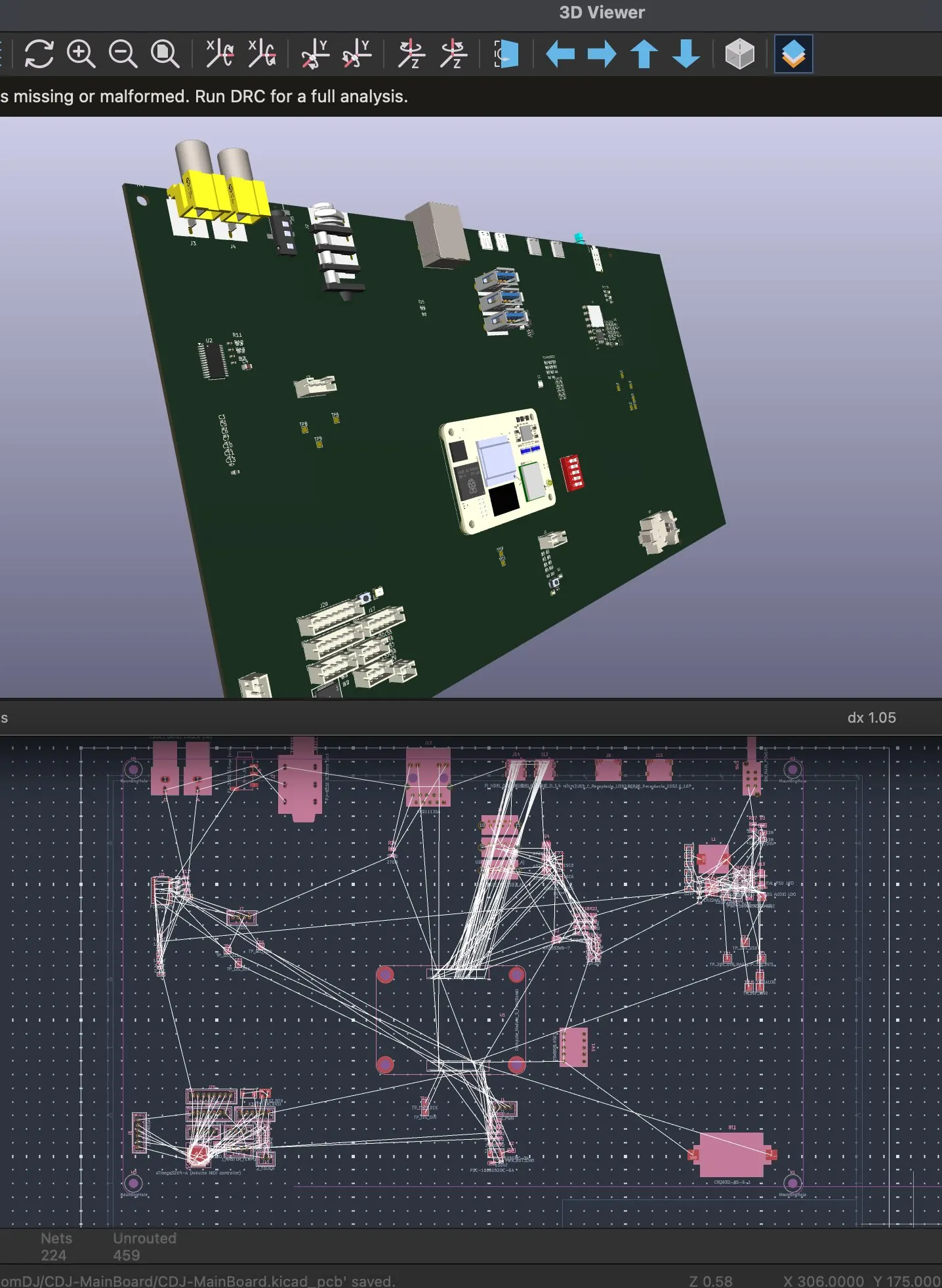
- The main board in KiCad on 13 February 2026: its parts placed, not yet routed.
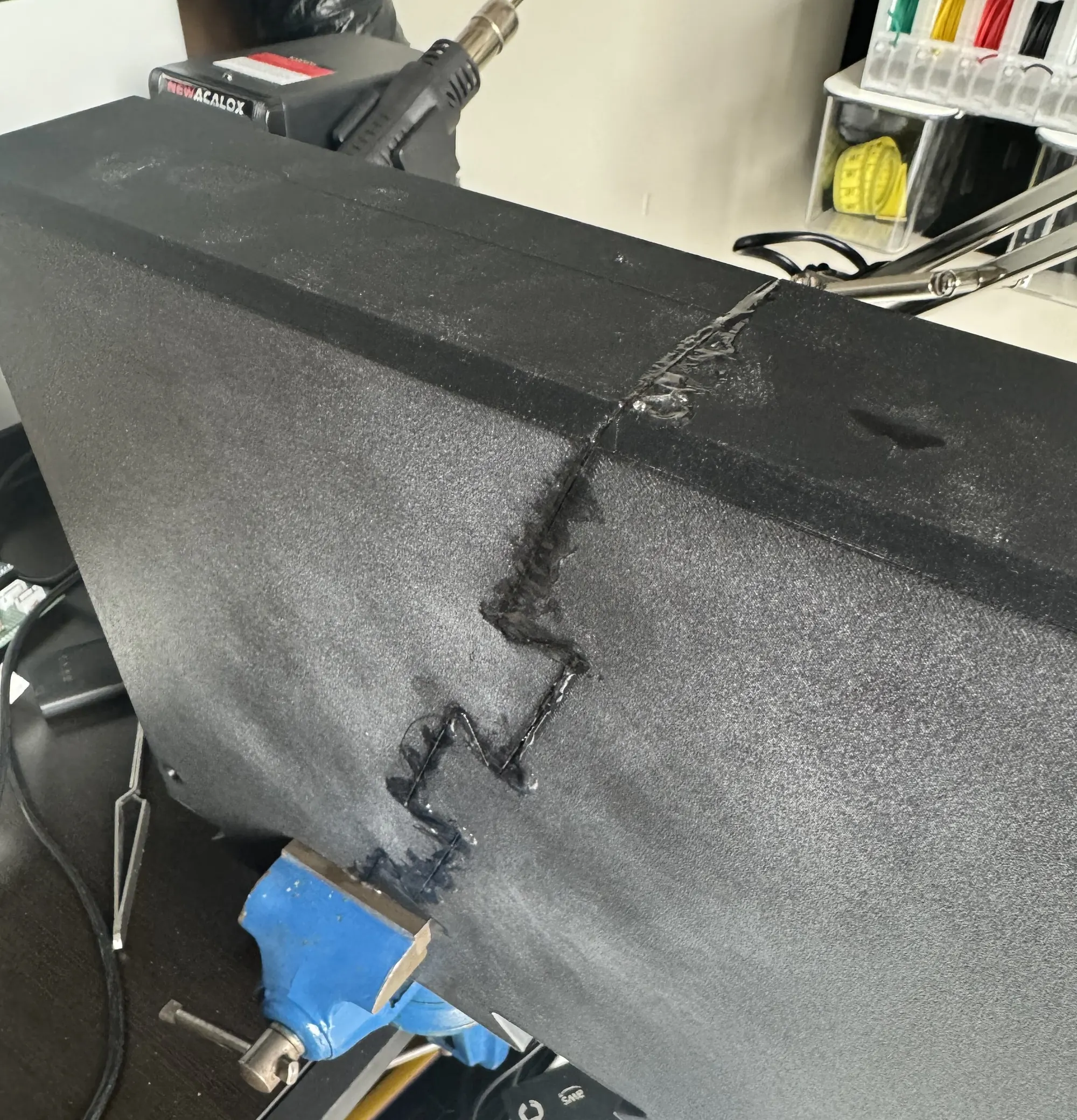
Two printed halves of a V1 panel, joined on a zig-zag seam and welded with melted plastic, 3 June 2026.
Jun 2026
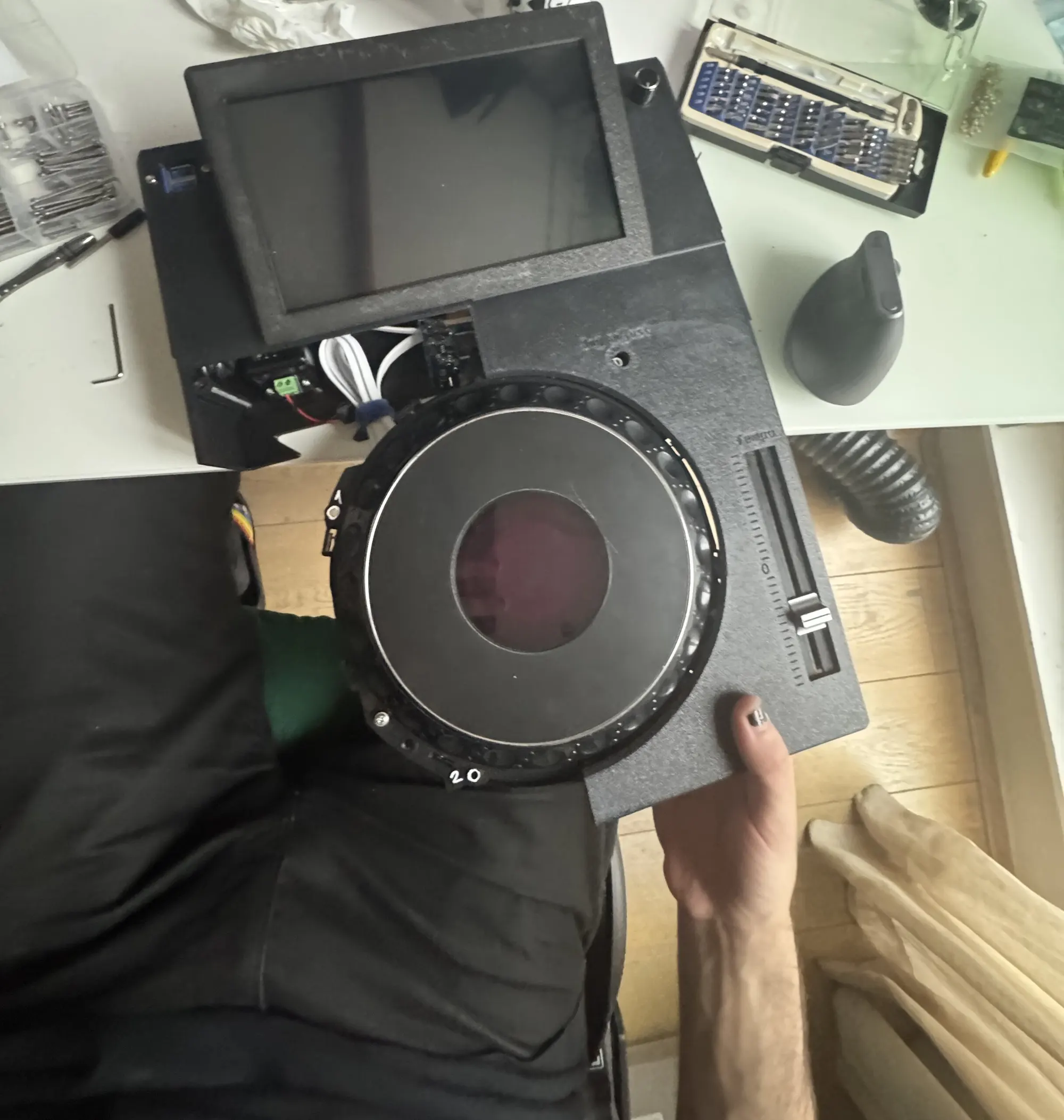
The V1 mock-up on 2 June 2026: the CDJ jog, the tempo fader and the screen in their printed parts.
Jun 2026
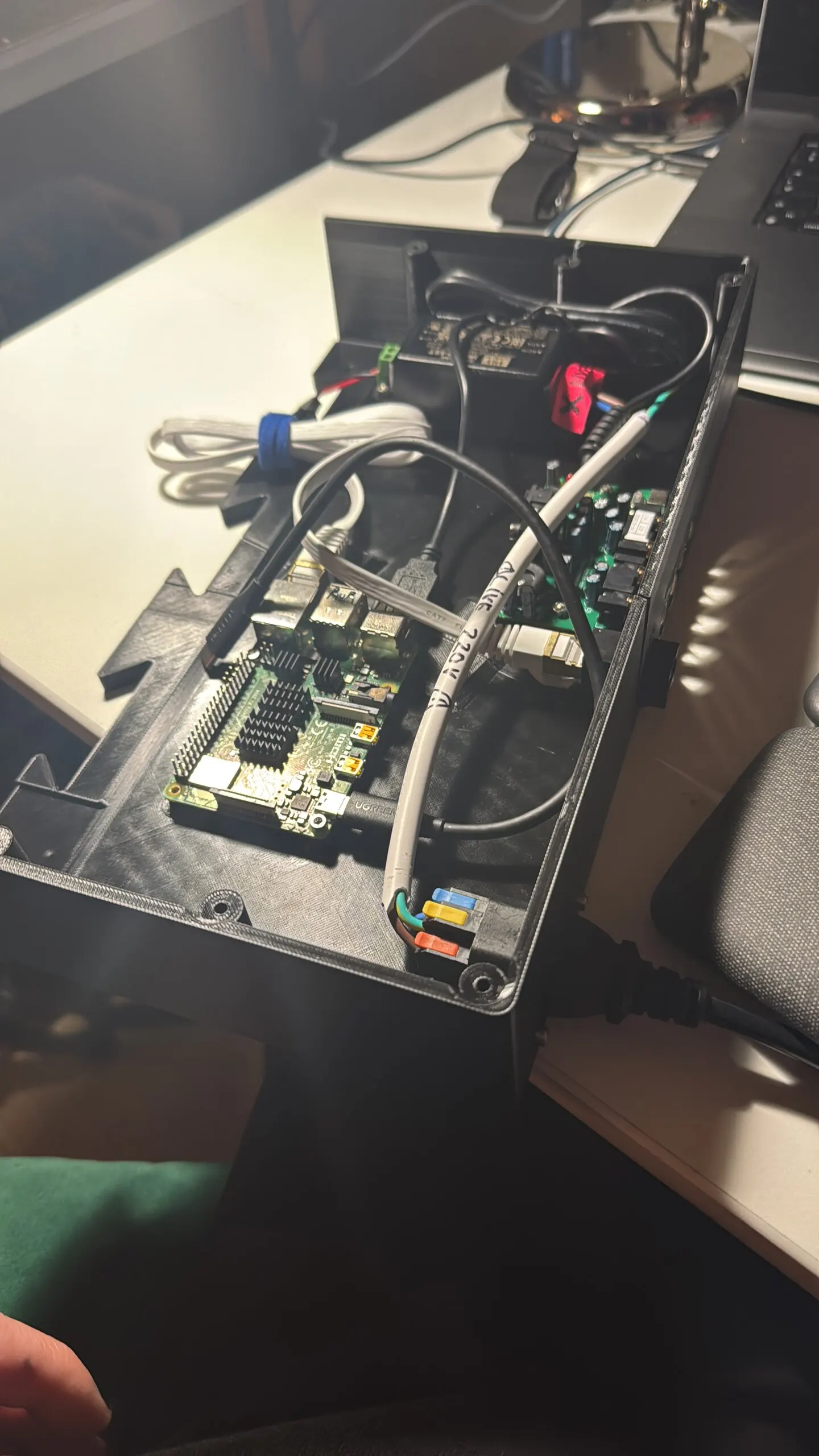
The first electronics in the printed tub: a Raspberry Pi 4, an audio board and a mains power supply, 18 May 2026.
May 2026